The Case for Tokenized Gold
"Combining the stability of gold with the efficiency of blockchain technology."
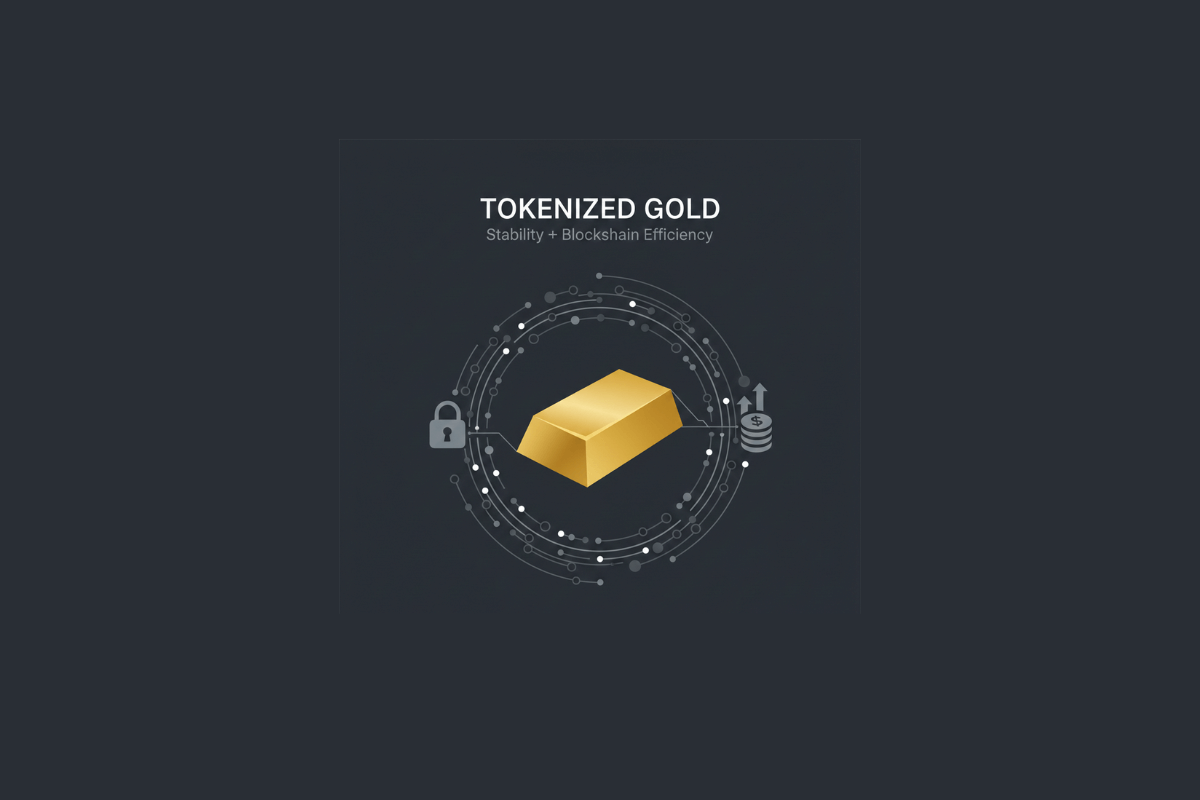
I’ve always admired gold. There’s something reassuring about holding a physical coin in your hand heavy, shiny, and with thousands of years of history behind it.
My grandfather kept gold coins in a safe. His father did too. In many cultures, gold isn’t just an investment; it’s a tradition.
But when I actually tried to buy and store physical gold myself, I quickly learned why it’s not as practical as it seems.
(Disclaimer: I am sharing my personal research and experience. This is not financial advice. Always do your own research before investing.)
The Problem with Physical Gold
I remember visiting a dealer to buy my first gold coin. The process was tedious:
- I paid a premium above the market price (about 5-8%)
- The dealer asked where I planned to store it
- I realized I’d need a safe or a bank deposit box (more fees)
- If I ever wanted to sell, I’d need to transport it somewhere and accept another spread
And what if I only had $500 to invest? A single gold coin costs much more. I couldn’t exactly buy a fraction of a bar from a dealer.
Physical gold is beautiful, but it has real limitations: it’s heavy, expensive to store, difficult to transport, and hard to divide.
This is where I discovered tokenized gold, and it changed how I think about owning the metal.
What is Tokenized Gold?
Tokenized gold represents physical gold bars held in secure, audited vaultsbut ownership is represented by a digital token on a blockchain.
Think of it like this: instead of holding a gold bar in your house, you hold a digital certificate that proves you own a specific amount of gold sitting in a professional vault. One token typically equals one troy ounce of fine gold (about 31.1 grams).
But unlike paper certificates from the past, blockchain tokens can’t be forged, duplicated, or issued without the actual gold backing them.
The Advantages I Discovered
Here are the list advantage that I found about tokenize gold
Portability & Divisibility
This was the biggest revelation for me. I can own $50 worth of gold, or $500, or $50,000. The token can be divided into tiny fractions, allowing me to own exactly the amount I want down to the cent.
And I can send it anywhere in the world in seconds, 24/7. No shipping, no insurance, no customs declarations.
Transparency & Verification
Blockchain technology provides a public, immutable ledger of ownership. When combined with regular physical audits of the underlying gold, I can actually verify that my gold exists.
Providers like PAX Gold (PAXG) and Tether Gold (XAUT) publish regular audit reports. I can check that every token is backed by real gold sitting in a real vault.
Reduced Friction
When I bought that physical coin, I paid a 6% premium. When I buy tokenized gold, the fees are significantly lower often around 0.1-0.5% trading fees on digital exchanges.
Selling is just as easy. No dealer negotiation, no shipping, no waiting.
Who Is Using This?
I assumed tokenized gold was a niche product for tech enthusiasts. But the numbers surprised me.
As of 2024, PAX Gold alone holds over $500 million in gold backing their tokens. Tether Gold holds even more. Combined, billions of dollars of gold are now represented digitally on blockchains.
Institutional investors, family offices, and individuals from countries with capital controls or unstable currencies are increasingly turning to tokenized gold as a way to access the metal without the logistical headaches.
“Gold is money. Everything else is credit.” J.P. Morgan, legendary American banker
Is It Really Safe?
I had my doubts. What if the company disappears? What if the vault is robbed?
Here’s what I learned:
- Custody: The gold is held by regulated custodians (like Brink’s) in high-security vaults in London, Switzerland, or Singapore
- Segregation: Your gold is legally distinct from the company’s assets. If the token issuer goes bankrupt, your gold is still yours
- Redemption: Most providers allow you to redeem tokens for actual physical gold if you want it (usually with a minimum amount)
It’s not risk-free, but for me, the risk profile is actually lower than storing gold in my house where it could be stolen, lost, or damaged.
Conclusion
Tokenized gold bridges the gap between ancient monetary wisdom and modern financial technology. I still appreciate physical gold there’s something primal about holding it. But for practical investing, the digital version simply makes more sense.
I get the stability and history of gold, combined with the speed and efficiency of digital assets. It’s the best of both worlds.
If you’ve been curious about gold but turned off by the logistics, tokenized gold might be worth exploring. You don’t have to choose between the old world and the new one.
Common Questions
Q: Do I actually own the gold, or just a claim? A: You own the gold. The token represents direct ownership of specific bars in a vault. You can view serial numbers and chain of custody in most cases.
Q: What happens if the blockchain has issues? A: The underlying gold still exists. Most token issuers have recovery mechanisms to help you claim your physical metal if there are technical problems.
Q: Are there fees for holding tokenized gold? A: Most providers charge a small annual fee (around 0.01-0.03%) for storage and insurance, typically deducted automatically.
Q: Is this the same as “digital gold” like Bitcoin? A: No. Tokenized gold is backed by physical metaleach token represents real gold in a vault. Bitcoin derives its value from network effects and scarcity, without any physical backing.
References
- PAX Gold. (2024). Monthly Audit Reports.
- Tether Gold. (2024). Gold Reserve Verification.
- World Gold Council. (2024). Gold Demand Trends Report.
- Brink’s Global Services. (2024). Precious Metals Storage Solutions.